
In the realm of personal electronics, durability and usability are often treated as secondary to aesthetics. However, for a device intended to be worn during intense physical activity or daily commutes, these “boring” features are often the most critical determinants of long-term satisfaction.
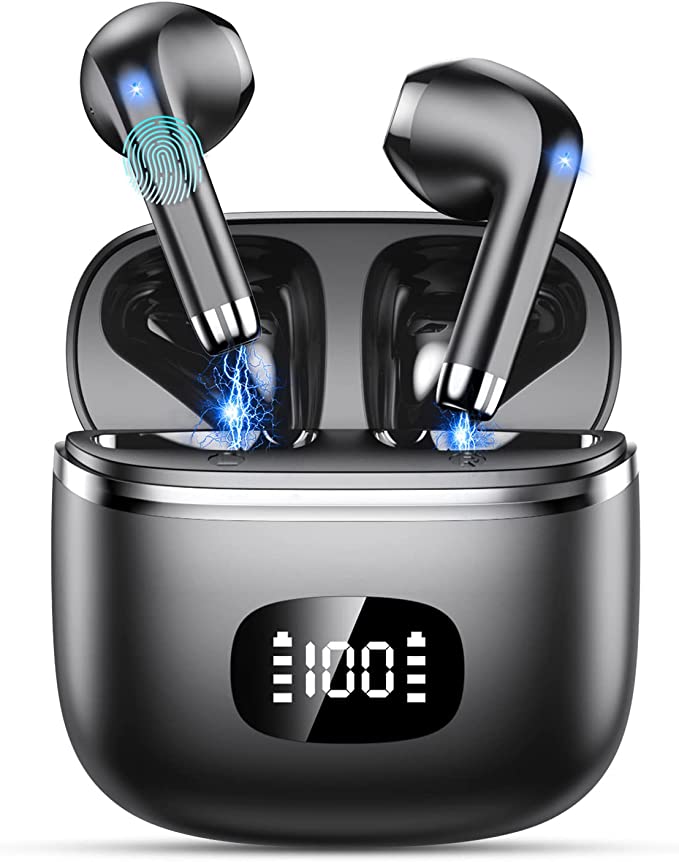
The POMUIC W23 illustrates a shift towards rugged utility in the consumer audio market. By incorporating military-grade IPX7 waterproofing and high-resolution LED telemetry, it addresses the two most common failure modes of wireless earbuds: moisture damage and battery anxiety.
Visualizing Energy: The Psychology of the LED Display
Standard charging cases act as “black boxes,” offering vague feedback through blinking lights. A single red LED might mean “10% battery” or “charging error.” This ambiguity creates cognitive friction—the user is never quite sure if their device is ready for the day.
The introduction of a Dual LED Digital Display fundamentally changes this interaction.
* Numeric Precision: A percentage readout (e.g., “87%”) provides actionable data. It allows the user to calculate usage time precisely (“I have enough power for my 2-hour flight”).
* Charging Confirmation: The independent bars for each earbud serve as a diagnostic tool. If one bar isn’t moving, the user immediately knows the contact pin is dirty or the bud isn’t seated—a common issue that often goes unnoticed until the user puts on a dead earbud.
This transparency transforms the charging case from a passive accessory into an active management tool, reducing “battery anxiety” through data availability.
The Hydrophobic Shield: Decoding IPX7
“Sweatproof” is a marketing term; IPX7 is an engineering standard. The International Electrotechnical Commission (IEC) defines IPX7 as the ability to withstand immersion in water up to 1 meter deep for 30 minutes.
Achieving this rating in an open-port device like an earbud usually involves Nano-Coating Technology. Engineers apply a microscopically thin, hydrophobic layer to the internal circuit boards (PCBA) and components.
* Surface Tension: When water enters the device (which can happen despite seals), the nano-coating increases the surface tension of the liquid, causing it to bead up and roll off rather than spreading across conductive pathways.
* Corrosion Resistance: Sweat is particularly destructive due to its salt content. The coating acts as a passivation layer, preventing the electrolytes in sweat from corroding the copper traces and solder joints.
For the user, this means the W23 isn’t just safe from rain; it’s safe from the corrosive reality of daily workouts, significantly extending the product’s functional lifespan.
Intuitive Interaction: Capacitive Logic
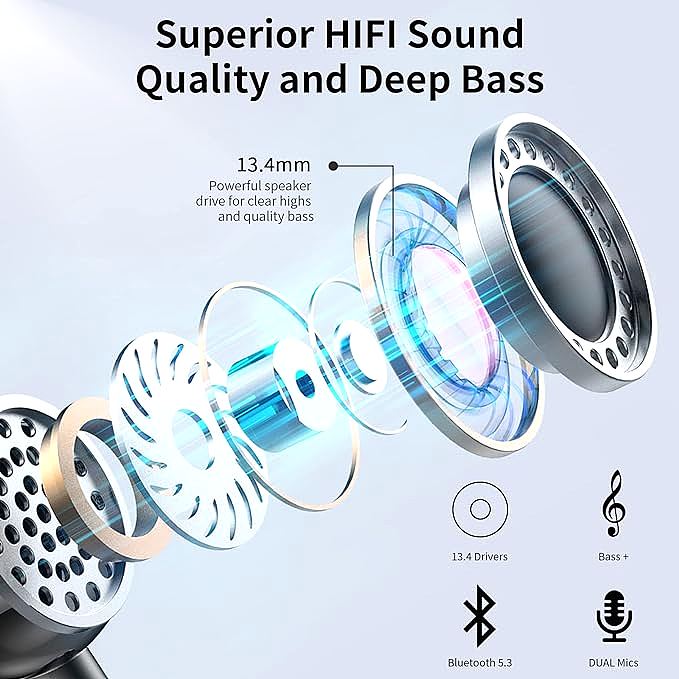
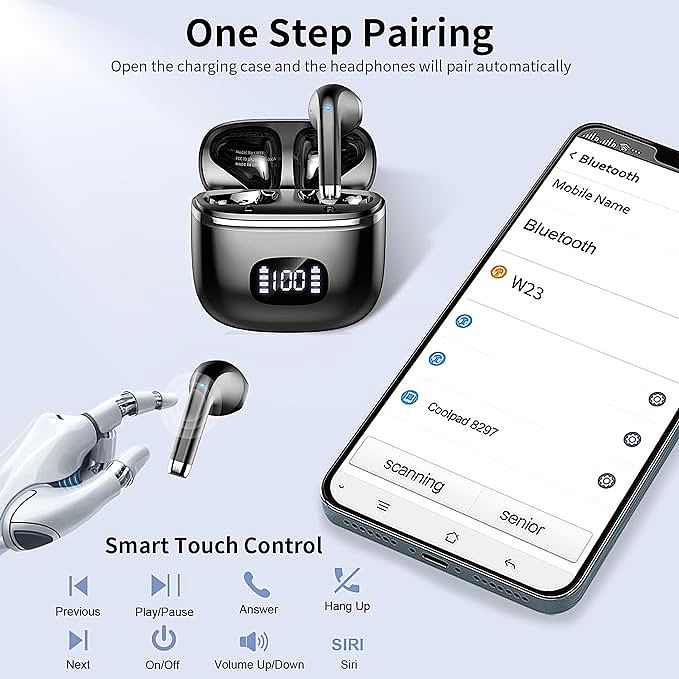
Completing the utility triad is the control interface. Physical buttons can be difficult to press on an in-ear device, often pushing the bud painfully into the canal. The W23 utilizes Capacitive Touch Sensors, which detect the electrical distortion caused by a finger’s approach.
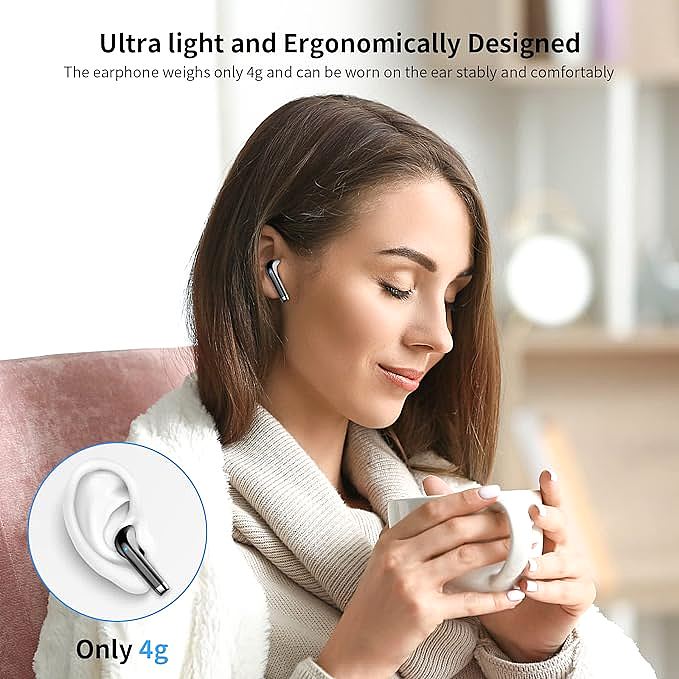
This zero-force interaction preserves the seal and comfort of the earbud during operation. While touch controls require precise tuning to avoid accidental triggers (e.g., from wet hair), they represent the modern standard for ergonomic interaction, allowing for complex commands (volume, track, call, assistant) without mechanical stress on the ear.
Conclusion: The Functional Imperative
The convergence of IPX7 durability, digital energy monitoring, and touch ergonomics in an accessible package signals a maturity in the TWS market. It suggests that high-end functionality is no longer a luxury but a baseline expectation. Devices like the POMUIC W23 prove that robust engineering can—and should—be available to everyone, turning the wireless earbud from a delicate gadget into a resilient daily tool.