
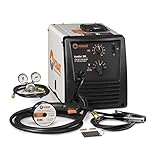
In the world of metal fabrication, the welding machine is often the star of the show. It creates the sparks, the heat, and the permanent bond that transforms raw stock into finished goods. However, a welder does not operate in a vacuum. It is the central node in a complex ecosystem of processes, tools, and environmental controls known as the “Fabrication Shop.” Whether this shop is a corner of a residential garage dedicated to automotive restoration or a dedicated commercial space for agricultural repair, the principles of efficiency, safety, and workflow remain the same.
A high-performance machine like the Hobart Handler 190 acts as a force multiplier, but its potential is only fully realized when integrated into a well-designed fabrication ecosystem. If the welder spends 30 minutes grinding a joint because of poor cutting, or 20 minutes untangling a cable because of poor shop layout, the amperage output of the machine becomes irrelevant. This article explores the holistic science of the fabrication environment, examining how to construct a high-efficiency workflow around a versatile MIG welding core, covering everything from the metallurgy of preparation to the economics of consumables and the ergonomics of safety.
The Workflow of Fusion: Beyond the Arc
Welding is, statistically, a small part of the fabrication process. Industry studies suggest that in a typical manual fabrication job, “arc-on time” (the time the welder is actually running) is often only 10% to 30% of the total project time. The remaining 70-90% is preparation, fit-up, and post-weld finishing. Therefore, maximizing shop efficiency requires focusing on the “Pre-Weld” and “Post-Weld” phases.
Phase 1: The Metallurgy of Preparation
A welding arc is a violent chemical event. Any contaminant present in the weld zone will be vaporized, ionized, or dissolved into the molten pool, leading to defects.
* The Oxide Barrier: As discussed in the previous article, aluminum (welded with the SpoolRunner 100) has a tough oxide layer. Efficient shops have dedicated stainless steel wire brushes for aluminum prep. Using a brush that was previously used on rusty steel will embed iron particles into the aluminum, causing galvanic corrosion and weld contamination. This is a workflow protocol issue: separate tools for separate metals.
* Mill Scale and Oil: Hot-rolled steel comes with a hard, blue-grey skin called mill scale. While high-power processes can burn through it, doing so alters the arc chemistry and stability. The Handler 190 performs best on shiny, bare metal. An efficient shop layout places the grinding/sanding station upstream of the welding station to ensure parts arrive clean.
* Joint Geometry: The Handler 190 can weld 5/16-inch steel in a single pass, but for critical structural joints, edge preparation is key. Creating a “V-groove” or bevel on thick plates increases the surface area for fusion and allows the electrode to reach the root of the joint. This mechanical preparation reduces the thermal stress on the welder and ensures 100% penetration.
Phase 2: The Geometry of Fit-Up
“Fit-up” is the alignment of parts before welding. Poor fit-up (gaps, misalignment) forces the welder to act as a gap-filler rather than a joining process.
* The Cost of Gaps: A 1/16-inch gap in a joint can double the amount of filler wire and gas required to complete the weld. It also increases heat input, leading to distortion.
* Jigs and Fixtures: A high-efficiency ecosystem relies on magnetic squares, clamps, and welding tables. These tools hold the thermal geometry of the part in check. The versatility of the Handler 190—with its ability to switch between delicate sheet metal voltage settings and high-amperage structural settings—is best utilized when the part stays where it is supposed to be.
Shop Layout and Ergonomics: The Physical Environment
The placement of the welder in the shop has a profound impact on workflow. The Hobart Handler 190 weighs approximately 89 pounds. While portable, it is not something one wants to carry across the shop every ten minutes.
The Mobile Welding Station
The concept of the “Welding Cart” is not just about storage; it is about extending the machine’s “Action Radius.”
* Gas Cylinder Management: The Handler 190 requires a shielding gas cylinder (typically 75/25 Argon/CO2 for steel or 100% Argon for aluminum). These cylinders are heavy and under high pressure. A dedicated cart secures the cylinder, preventing catastrophic accidents if it were to tip over and shear the valve.
* Umbilical Management: The machine has a 10-foot MIG gun cable and a 10-foot work cable (ground). In a poor layout, these cables are trip hazards or get damaged by hot slag. In a good layout, the cart allows the machine to be positioned so the cables hang freely without sharp bends, which ensures smooth wire feeding.
* Accessory Organization: The SpoolRunner 100 spool gun, when not in use, needs a safe harbor. Leaving it on a dusty floor invites contamination of the aluminum wire. A well-designed station has hooks or holsters for the backup gun, keeping the expensive equipment clean and ready.
Electrical Infrastructure
The Handler 190 operates on 230V power. This dictates shop geography.
* The Dedicated Circuit: A 230V welder should ideally be on its own circuit breaker to avoid voltage drops when other equipment (like an air compressor) kicks on. Voltage drops can cause the welder’s arc to stutter or the wire feed speed to fluctuate.
* Extension Cord Physics: If an extension cord is needed, it must be heavy-gauge (e.g., 8AWG or 10AWG depending on length) to minimize resistance. Using a thin cord acts as a resistor, robbing the welder of the voltage it needs to maintain a stable arc, effectively downgrading the machine’s performance.

The Economics of Consumables: Feeding the Machine
An “Evergreen” shop strategy must account for the ongoing cost of operation. A welder consumes three things: Electricity, Wire, and Gas.
The Wire Economy
Wire is bought by the pound.
* Spool Size Economics: The Handler 190 accommodates both 4-inch (2 lb) and 8-inch (10 lb) spools. The price per pound of wire on a 2 lb spool is significantly higher than on a 10 lb spool. A high-efficiency shop standardizes on 8-inch spools for common steel wire (like ER70S-6) to reduce operating costs.
* Aluminum Wire Storage: Aluminum wire is hygroscopic (absorbs moisture from the air). Moisture in the wire turns into hydrogen gas in the weld, causing porosity. The SpoolRunner 100 uses small 4-inch spools. Smart inventory management means buying aluminum wire in smaller quantities or vacuum-sealing stored spools to prevent hydration waste.
The Gas Equation
Shielding gas is often the hidden cost of MIG welding.
* Flow Rate Optimization: The regulator included with the Hobart Handler 190 allows for flow adjustment. Many beginners set the flow too high (e.g., 30-40 CFH), thinking “more is better.” This creates turbulence that sucks air into the weld, causing defects, and wastes gas. A flow rate of 15-20 CFH is usually sufficient for indoor work. Optimizing this saves nearly 50% on gas costs.
* Dual Gas Setup: For a shop welding both steel and aluminum, managing two large cylinders can be expensive (rental fees). Some shops choose to own smaller cylinders to avoid monthly demurrage charges.
Safety Engineering: The Hierarchy of Controls
Welding emits UV radiation, toxic fumes, and molten metal. A sustainable shop ecosystem prioritizes operator health.
Fume Management
The arc melts metal and vaporization occurs. Manganese and hexavalent chromium (from stainless steel) are serious respiratory hazards.
* Source Capture: The most effective control is capturing fumes at the source. This doesn’t necessarily mean expensive industrial filtration systems. For a home shop, positioning a fan to pull fumes away from the welder’s breathing zone (cross-draft), rather than blowing them around, is a basic application of fluid dynamics for safety.
* PPE as the Last Line: Respirators are essential, but they are the last line of defense. The shop’s ventilation architecture is the primary defense.
UV Protection and Flash Burn
The UV radiation from a MIG arc is intense enough to cause skin burns in minutes and permanent eye damage in seconds.
* Reflective Surfaces: A common mistake in shop design is painting walls white. White walls reflect UV radiation, potentially burning the back of the welder’s neck or injuring bystanders. Industrial fabrication shops often paint walls in matte, dark colors (yellow or grey) to absorb stray UV light.
* Curtains and Screens: Using translucent red or orange welding curtains allows light to pass (so people don’t bump into them) but blocks harmful UV rays, creating a safe zone for the Handler 190 to operate without endangering others in the shop.
The Versatility Advantage: ROI of the Multi-Process Station
From a business or serious hobbyist perspective, the Return on Investment (ROI) of a machine like the Handler 190 comes from its “Scope of Capability.”
Reducing Outsourcing
A shop equipped only for steel (no spool gun) must outsource aluminum repairs. This involves vendor management, transport time, and markup costs.
* The Spool Gun Payback: The cost of the SpoolRunner 100 is often recouped after just 2-3 small aluminum repair jobs (e.g., fixing a pontoon boat railing or an aluminum casting). By bringing this capability in-house, the shop captures that value.
* Turnaround Time: The ability to switch from steel to aluminum in 2 minutes (plug in gun, switch gas) means a project doesn’t stall. This agility is the core value proposition of the multi-material ecosystem.
Asset Longevity
The Hobart Handler 190 is a transformer-based machine. In the age of inverters (which are lighter but contain complex, sensitive electronics), the transformer welder is the “diesel engine” of the welding world—heavy, robust, and enduring.
* Durability ROI: For a shop environment where dust, vibration, and occasional impacts are common, the simplicity of a transformer design often translates to a longer service life with fewer board failures. This makes it a foundational asset that retains value over decades, not just years.

Conclusion: The Integrated Fabricator
Building a shop around the Hobart Handler 190 with SpoolRunner 100 is an exercise in systems thinking. The machine provides the raw capability—the 190 amps of fusing power, the precise wire delivery, the arc stability. But the “Fabrication Ecosystem” provides the context in which that capability is converted into value.
By understanding the metallurgy of prep, the ergonomics of the workspace, the economics of consumables, and the engineering of safety, the fabricator transforms from a person with a welder into a manufacturing node. In this optimized environment, the arc is struck with confidence, knowing that the material is clean, the joint is true, the gas is flowing efficiently, and the operator is safe. This is the definition of professional fabrication, regardless of whether it happens in a factory or a backyard.

