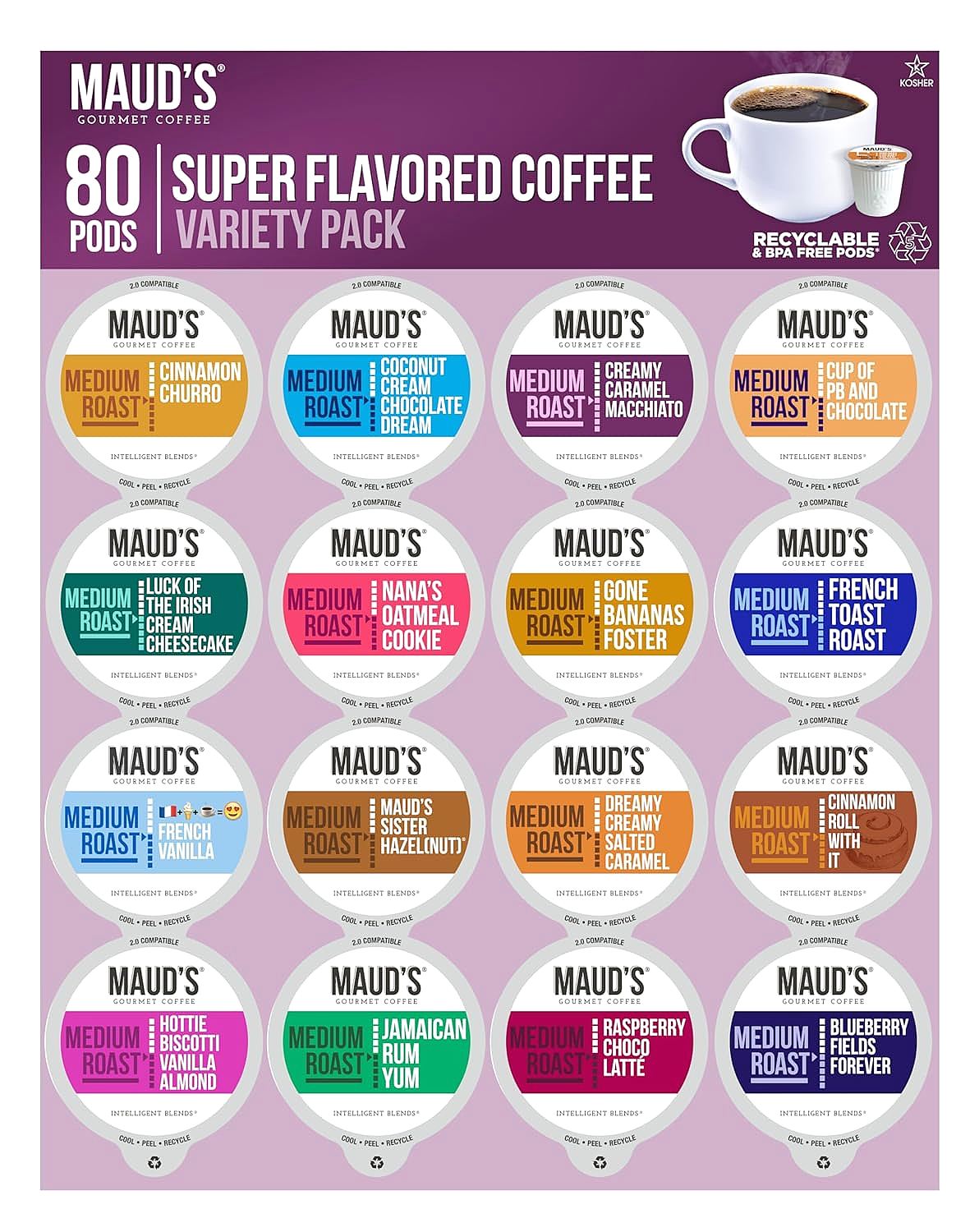

It starts as a scent, a warm, inviting promise that curls out of the mug. It’s not just coffee; it’s “Cinnamon Churro,” “Raspberry Choco Latte,” or perhaps the ubiquitous “French Vanilla.” We take a sip, and the flavor confirms the aromatic promise. But what are we actually tasting? Is it the bean, an additive, or some complex alchemy happening right on our palate? The journey into a cup of flavored coffee is a journey into a microscopic world of chemical reactions and molecular mimicry, where science creates the art we drink.

To understand what’s in a flavored coffee, we must first appreciate the staggering complexity of a simple, unflavored black coffee. The humble coffee bean, before roasting, is a quiet vessel of starches, proteins, and acids. The magic begins with heat. During roasting, a process akin to the browning of bread or the searing of a steak, two critical chemical reactions take place: the Maillard reaction and Strecker degradation. This cascade of events transforms the bean’s building blocks into a dizzying array of aromatic compounds. In fact, according to the Journal of Food Science, over a thousand different volatile compounds have been identified in roasted coffee—more than double the number found in red wine.
These compounds are the coffee’s native orchestra. The pyrazines contribute the nutty, roasted, and earthy base notes. Aldehydes and ketones might offer fruity or floral high notes. Furans can provide a hint of caramel sweetness, while sulfur-containing compounds like 2-furfurylthiol deliver that characteristic, potent “roasty” coffee aroma. A medium roast, often chosen for flavored coffees like those in Maud’s variety pack, aims for a balance, a well-rounded canvas of these notes, ensuring the coffee foundation is rich but not so overpowering that it bulldozes any added flavor. This carefully crafted canvas is the stage upon which the guest stars will perform.

So, if a simple black coffee is already a complex chemical orchestra, what happens when a new lead vocalist—like ‘French Vanilla’ or ‘Cinnamon Churro’—steps onto the stage? This is where the science of flavor creation takes over. Let’s take ‘French Vanilla’. The key aromatic compound responsible for vanilla’s signature scent is vanillin. It can be extracted naturally from vanilla beans, a costly and labor-intensive process, or it can be synthesized in a lab. The synthetic version, often ethyl vanillin, is chemically almost identical but can be two to four times more potent, allowing for a powerful, consistent flavor profile. Flavor chemists don’t just add vanillin; they create a ‘flavor system’. This might include other molecules to add creamy or buttery notes, all suspended in a carrier solvent (like propylene glycol) that ensures the flavor disperses evenly on the beans after roasting and remains stable until brewing.
The same principle applies to a flavor like “Cinnamon Churro.” The primary molecule for cinnamon is cinnamaldehyde. To create the “churro” experience, chemists might add compounds like diacetyl for a buttery note and other lactones to evoke the taste of fried dough. These flavor systems are meticulously designed to be heat-stable and water-soluble, ensuring that when your Keurig forces hot, pressurized water through the pod, the molecules are efficiently extracted into your cup, recreating the intended flavor profile with remarkable consistency.
But simply adding a flavor molecule to the mix isn’t the end of the story. The real magic—or sometimes, the real disaster—happens when these new compounds interact with the coffee’s native chemistry. It’s a dance of molecules in your mug, and not every partner is compatible. A highly acidic coffee bean from a specific terroir might clash with a delicate cream-based flavor, causing it to taste sour or curdled. Conversely, the smoky, chocolatey notes from a dark roast can beautifully complement and elevate a raspberry flavor, creating a harmonious “Raspberry Choco Latte.” The art of the coffee roaster and flavorist lies in this pairing—selecting a bean origin and roast level that will support, not fight, the added flavor profile.

Finally, the chemical journey ends in a biological one: your perception. Why do you love the “Coconut Cream Chocolate” pod while your friend finds it repellent? Genetics plays a significant role. Our DNA dictates the number and type of taste receptors on our tongue and olfactory receptors in our nose. Some people are “supertasters,” genetically predisposed to perceive bitterness more intensely, which might make even a medium roast coffee seem overpowering. Furthermore, our flavor memories, built over a lifetime of experiences, shape our preferences. The aroma of cinnamon might transport one person to a joyous holiday morning, while for another, it’s a neutral spice. The cup of coffee is not just a chemical solution; it’s an interpretation.
The next time you brew a flavored coffee pod, take a moment. Appreciate the science behind that seductive aroma. You’re not just drinking coffee. You’re experiencing the culmination of agricultural science, advanced chemistry, and intricate engineering, all culminating in a fleeting, personal, and delicious moment. It’s a testament to our quest to not only capture flavor, but to invent it.