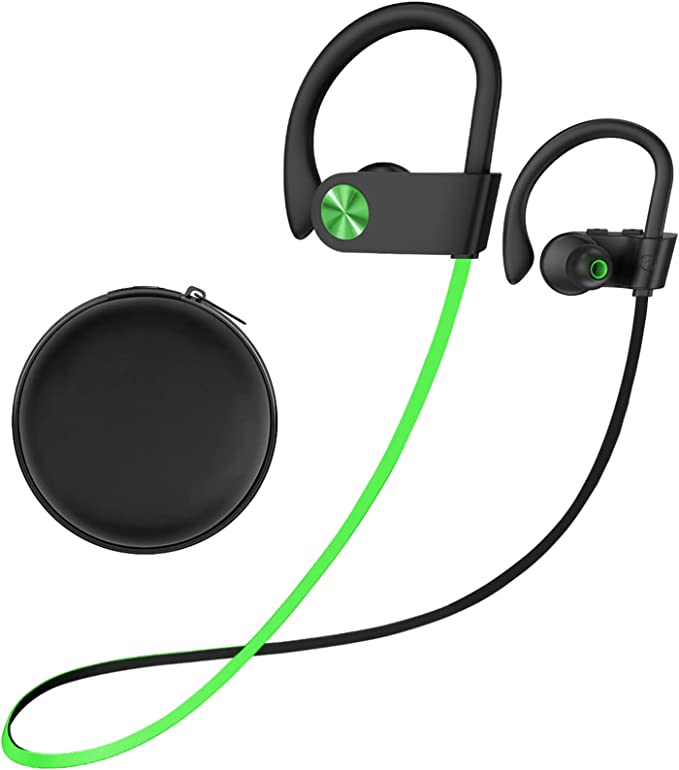

It’s a familiar ritual for millions: lace up the shoes, queue the playlist, and insert the earbuds. The world fades, replaced by a rhythm that fuels the legs and lungs. For me, that rhythm is powered by a pair of Stiive U8I headphones—a simple, effective piece of gear. The product page promised me “IPX7 waterproof protection,” a technical badge of honor I wore with confidence through rainy jogs and grueling summer runs. But lately, a nagging thought has started to creep in during the final, sweat-drenched miles: this salty, acidic stuff pouring from my skin is a world away from clean tap water. Am I unknowingly marching my trusty audio companion towards a slow, corrosive death? This question sent me down a rabbit hole, not as a consumer, but as an investigator—a self-appointed Sweat Engineer.
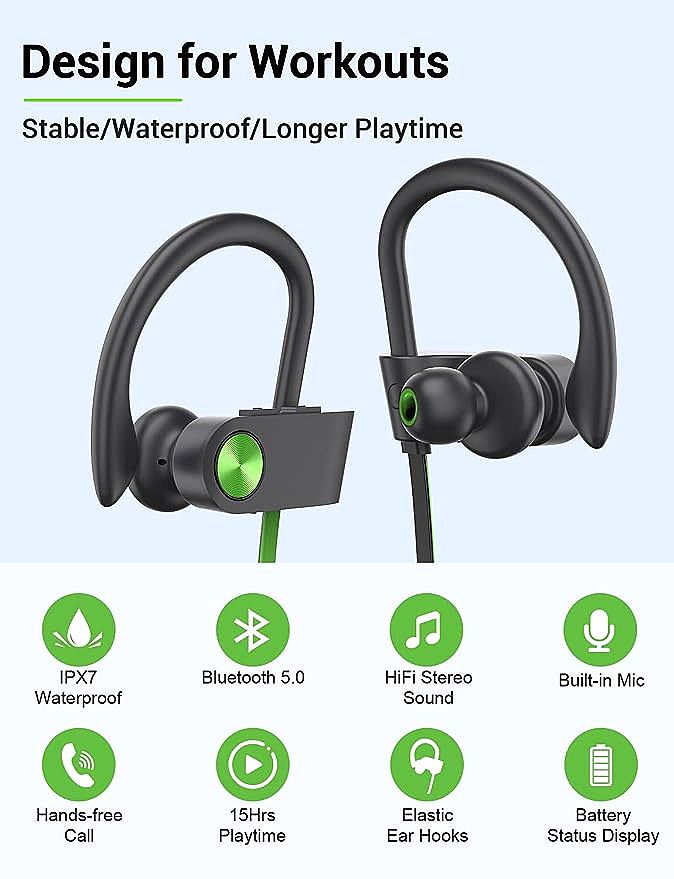
Deconstructing the Code: What IPX7 Really Means
The first clue lies in that ubiquitous “IPX7” rating. It feels reassuringly precise, a stamp of scientific certainty. But it’s a standard, and like any standard, it’s defined by its specific, controlled, and often limited test conditions. The code comes from the International Electrotechnical Commission’s standard 60529. “IP” stands for Ingress Protection, ‘X’ means it hasn’t been rated for dust protection, and the ‘7’ is our golden number for liquid.
Here’s what it takes for a device to earn that ‘7’: it must survive being submerged in freshwater at a depth of one meter for 30 minutes without any harmful quantity of water getting inside.
Let that sink in. The test specifies freshwater. It’s conducted in a static, pressure-controlled lab environment. This certification is a fantastic guarantee against accidentally dropping your earbuds in a sink, a puddle, or even the toilet. It’s a robust defense against rain. But the standard says nothing about jets of water, salt water, chlorinated pool water, and most importantly for our purposes, the complex chemical cocktail that is human sweat.
So, the IPX7 rating promises protection against a gentle dip in a pool of pure water. But here’s the critical question the standards sheet doesn’t answer: since when is a grueling, hour-long workout a ‘gentle dip’? And more importantly, when did our sweat become pure water?
The Real Enemy: Why Sweat is Not Water
Your body’s cooling system is an incredibly effective, but fundamentally corrosive, biological process. Sweat is approximately 99% water, but it’s the remaining 1% that does the real damage. This isn’t just a list of ingredients; it’s an electrical engineer’s nightmare.
First, you have salts, primarily sodium chloride. When dissolved in water, these salts create an electrolyte solution, which is far more electrically conductive than pure water. If this solution breaches the seals of an electronic device, it doesn’t just cause a short circuit; it dramatically accelerates the process of galvanic corrosion. This is an electrochemical reaction where two dissimilar metals (like those found on a circuit board) begin to degrade rapidly in the presence of an electrolyte. It’s rust on fast-forward.
Second, sweat is acidic. Its pH typically ranges from 4.5 to 7.0. This acidity can, over time, eat away at the rubber seals, glues, and even the plastic casings of earbuds, creating microscopic pathways for moisture to enter. The very barriers designed to keep water out are being slowly weakened by the substance they are most frequently exposed to.
We’ve established that sweat is a corrosive cocktail, relentlessly seeking a way into our precious electronics. It seems like a losing battle. But engineers have a secret weapon in this microscopic war: an invisible shield designed to make water (and hopefully, sweat) bead up and roll away. Let’s dive into the fascinating world of nano-coatings.
The Invisible Armor: The Science of Nano-Coatings
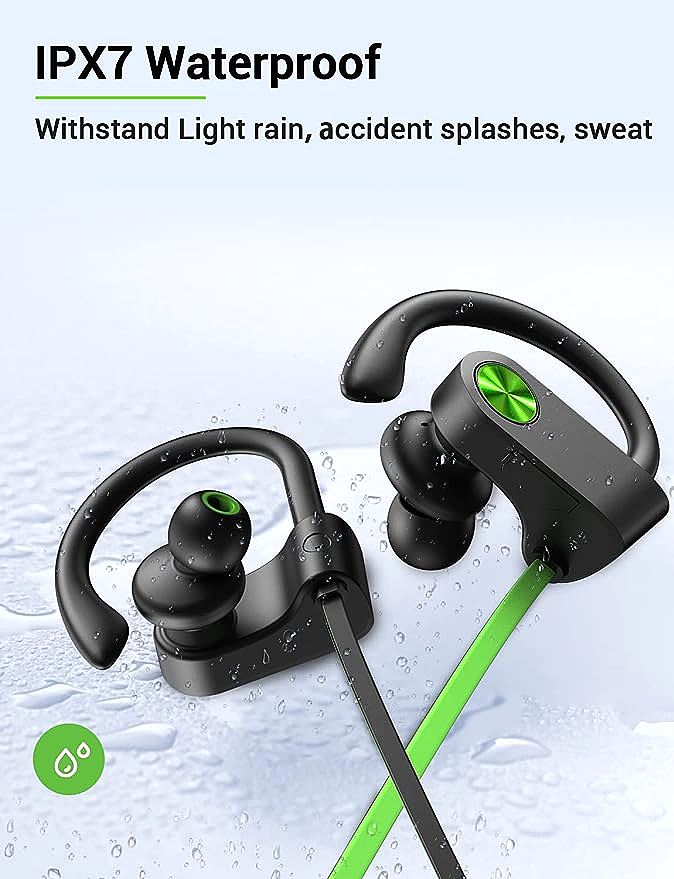
Many modern electronics, including the Stiive U8I, boast an “interior nano-coating.” This isn’t just marketing fluff; it’s a real and fascinating application of material science. Imagine taking the delicate internal circuit board and spraying it with an ultra-thin, transparent layer of a hydrophobic polymer.
“Hydrophobic” literally means “water-fearing.” These coatings work by creating a surface with very low surface energy. Water molecules are more attracted to each other than to the coated surface, so they bead up into tight spheres and roll off, much like rain on a freshly waxed car. This is often achieved through materials that create a microscopic, spiky texture, further minimizing the contact area for a water droplet.
This nano-coating acts as a crucial second line of defense. If sweat does manage to get past the physical seals, the coating can prevent it from shorting out the circuitry. It’s a fantastic piece of engineering. However, it’s not invincible. These coatings are incredibly thin—measured in nanometers—and can be compromised by physical abrasion or prolonged exposure to certain chemicals. While they provide excellent protection against an occasional splash, they may not hold up indefinitely against a constant bath of acidic, salty sweat, especially if it’s not cleaned off.
The Sweat Engineer’s Protocol: Your Actionable Maintenance Plan
Becoming a Sweat Engineer means shifting from a passive user to a proactive owner. Your IPX7 rating is your first line of defense, but your maintenance routine is what wins the war. Based on the science, here is a simple protocol to dramatically extend the life of any pair of water-resistant workout earbuds:
- The Post-Workout Wipe-Down (Mandatory): Immediately after every workout, use a soft, dry cloth to wipe down the entire surface of your earbuds. The goal is to remove the corrosive sweat residue before it has time to dry and crystallize.
- The Fresh Water Rinse (Occasional): Once a week, or after a particularly intense session, perform a “controlled rinse.” Dampen a cloth with fresh water and gently wipe the earbuds again. This helps to dissolve and remove any stubborn salt deposits the dry wipe missed. Never use soap or alcohol, as these can degrade the seals and coatings.
- Inspect the Ports and Seams (Weekly): Check the charging port and any physical seams. Use a dry, soft brush (like an old toothbrush) to gently clear away any debris or salt crystals that might have accumulated. Ensure the charging port cover, if there is one, is always securely closed before a workout.
- Air-Dry Completely (Always): After wiping or rinsing, let the earbuds air-dry completely before placing them back in their charging case. Sealing damp earbuds in a case is a recipe for creating a high-humidity corrosion chamber.
Conclusion: From Passive User to Proactive Owner
The IPX7 rating on my Stiive U8I isn’t a lie, but it is a lab-based truth that requires real-world translation. It’s not a license to be careless, but rather a foundation of protection upon which good habits must be built. Understanding that sweat is an aggressive, corrosive agent, and that our maintenance routine is the true long-term shield, changes everything.
We don’t need to be afraid of sweat. It’s a sign of hard work and progress. By embracing the mindset of a Sweat Engineer, we can understand the forces at play and take simple, scientifically-sound steps to ensure our gear survives to power us through the next workout, and the many after that. The goal isn’t just to use our tech, but to master its care, ensuring the rhythm never stops.

