You’ve spent $150 on new, high-tech wireless earbuds. The music, powered by hybrid drivers, sounds incredible. You have a perfect seal, and the world melts away.
Then, you make your first phone call.
The person on the other end says the five dreaded words: “You sound like you’re in a tunnel.”
Welcome to the dirty little secret of the true wireless world: making you sound good to _other people_ is the hardest engineering challenge of all.
The Physics Problem: Your Mics Are in Your Ears
Think about it. When you talk on your phone, you hold the microphone right next to your mouth.
When you use earbuds, the microphones are in your ears. This creates two massive problems:
1. They are far from your mouth. Your voice is much quieter by the time it reaches your ear.
2. They are close to everything else. The mics pick up the wind, the passing cars, the café chatter, and the keyboard clicks _at the same volume_ (or louder) than your voice.
Your earbuds are faced with an impossible task: find your quiet voice inside a sea of loud noise.
The “Fixes” Engineers Are Trying
Engineers aren’t lazy; they are fighting physics. Here’s what they’re using.
1. Stems (The “AirPod” Look)
The “stem” design on many earbuds isn’t just for looks. It’s a desperate attempt to move the microphones down, even just an inch, closer to your mouth.
2. Multiple Microphones (Beamforming)
This is the most common solution. Instead of one mic, they use two (or more) per earbud. By comparing the tiny time delay between when sound hits each mic, an algorithm can “triangulate” where the sound is coming from. It creates a “beam” of listening pointed at your mouth and tries to ignore sounds from other directions.
3. Noise Cancelling Software (Like “cVc”)
This is the most misunderstood feature. You will see specs like “Qualcomm cVc” (Clear Voice Capture).
This is NOT ANC. Let’s be very clear:
* ANC (Active Noise Cancelling): Is for YOU. It silences the outside world so _you_ can enjoy your music.
* cVc (Clear Voice Capture): Is for the PERSON YOU ARE CALLING. It’s a software algorithm that runs _after_ the mics pick up all the sound. It analyzes the audio and tries to identify and _subtract_ steady background noises (like an office fan, road noise, or wind).
It’s a “clean-up” tool. It doesn’t make your voice clearer; it just makes the _noise around_ your voice quieter.
Case Study & The Hard Truth
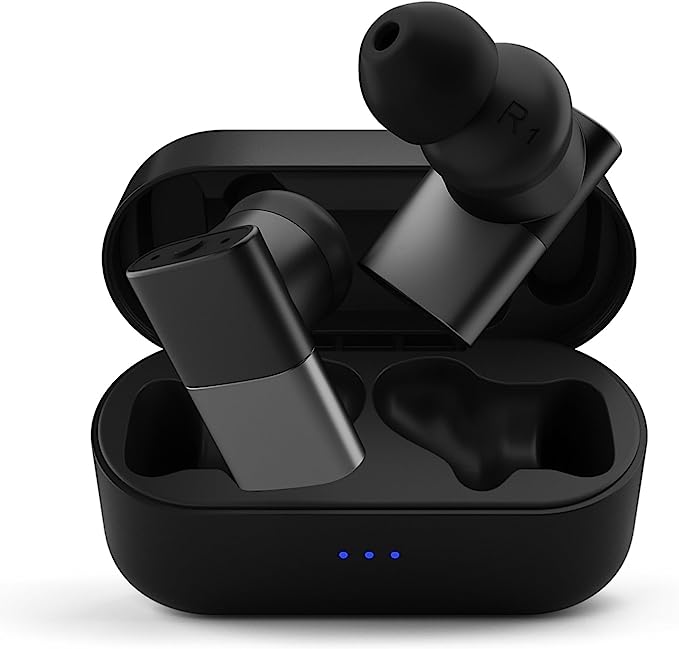
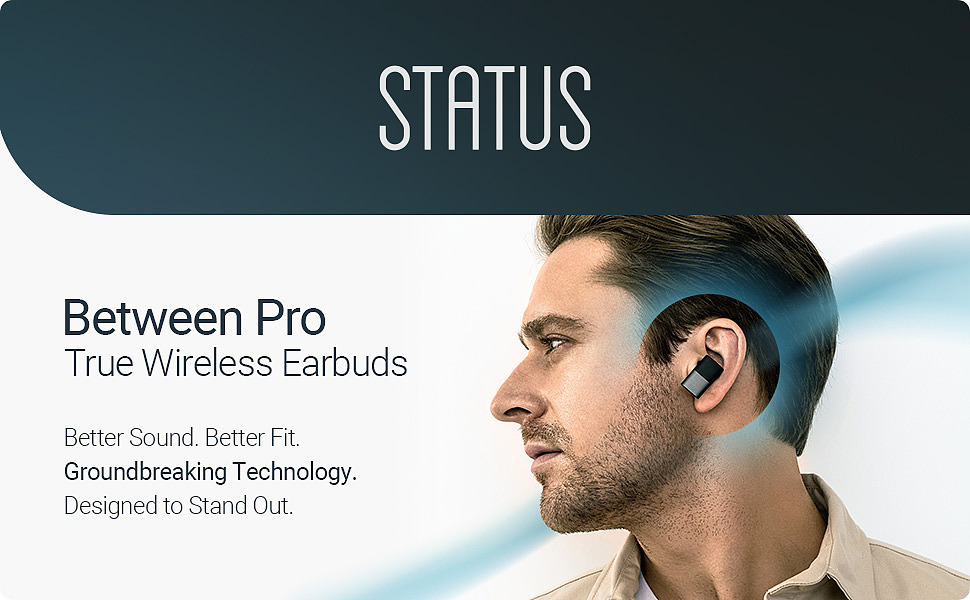
Let’s look at the Status SAEE-3X Between Pro. On paper, it does everything right:
* It has four external microphones (likely for beamforming).
* It uses Qualcomm cVc noise cancellation (the clean-up software).
Even with all this tech, some users still report that call quality is just “okay.” This isn’t a failure of the product; it’s the reality of the 100-170 price point.
The hard truth is that wind is the ultimate enemy. It hits all the microphones at once, overwhelming the algorithms. And creating the processing power (like Apple’s H2 chip) to truly, intelligently separate a voice from chaos is extremely expensive.
Your Takeaway: Manage Your Expectations
When you are buying earbuds, especially in the “Curious Upgrader” price range, you are often making a choice.
* Choice A: Prioritize music quality (Hybrid Drivers, Codecs, Battery).
* Choice B: Prioritize call quality (Premium, expensive AI processing).
Most products in this range (like the Status Pro) are Choice A. They are built for an incredible listening experience. They are perfectly fine for a quick call in a quiet room, but you shouldn’t expect them to perform miracles in a windy street.
For that critical meeting? You’re still better off just using your phone.